An unusually high number of newborn southern right whale deaths at Península Valdés has prompted an intensified investigation, supported by more than two decades of systematic health monitoring in the region.
Ocean plastic pollution is accidentally on the menu for southern giant petrel chicks. Even small nibbles of it may affect their physiology during development, according to a study from the University of California, Davis, and Argentina's National Research Council (CONICET).
A new study has uncovered the first evidence of plastic-related chemicals accumulating in southern right whales and the first documented case of these contaminants being found in whale calves anywhere in the world.
For more than two decades, Dr. Michelle Hawkins has helped shape the future of raptor medicine, wildlife rehabilitation, and conservation through her leadership at the California Raptor Center. From first discovering the Center as a UC Davis resident in 1998 to serving as medical director beginning in 2005 and director since 2012, Michelle's vision and dedication have left an enduring mark on the health and welfare of countless birds of prey, the students and professionals she has mentored, and the continued growth of the Center.
The SeaDoc Society has hired a new full-time veterinary translational scientist, who will join the team on Orcas Island starting this summer.
Dr. Michelle Barbieri Lino, who interned with SeaDoc as a veterinary student back in 2009, monitoring the marine mammal stranding network among other roles, will be moving to Orcas Island with her husband and 7-year-old daughter this summer.
Have you registered for the Gorilla Doctors virtual meet & greet with their new Executive Director Dr. Sonya Kahlenberg? On Thursday, April 9 at 9AM PT/12PM ET, Gorilla Doctors will be hosting a free live event featuring Dr. Sonya in conversation with Dr.
Victoria Priester, a fourth-year veterinary student at Cornell University, has wanted to be a veterinarian for as long as she can remember. Growing up in the Maryland suburbs outside Washington, DC, she spent much of her time working on a horse farm in Maryland during high school. She also has deep family roots in agriculture through her family’s farm in Mississippi, cultivating experiences that shaped both her love of animals and her path toward veterinary medicine.
We’re excited to share an important update from our California Carnivores Program! As part of their mission to conserve California’s native carnivores through science and research, their research program is expanding to include bobcats in their study portfolio. With approval for their CDFW Scientific Collecting Permit, the team will be able to better understand bobcat ecology, health, their role in California ecosystems, and the threats they face. Science-based conservation starts with knowledge, and we’re proud to take this next step toward protecting native wildlife.
Seven weaned elephant seal pups in California’s Año Nuevo State Park tested positive for highly pathogenic avian influenza (HPAI) H5N1, the U.S. Department of Agriculture’s National Veterinary Services Laboratory confirmed Tuesday evening.
The UC Davis School of Veterinary Medicine has launched a landmark search for a visionary leader in free-ranging wildlife health, a faculty appointment that will also serve as Director of the Karen C. Drayer Wildlife Health Center.
by Agreement on the Conservation of Albatrosses and Petrels (ACAP)
On 19 June 2025, conservationists and wildlife advocates worldwide will celebrate World Albatross Day, an opportunity to highlight the conservation crisis faced by these iconic ocean dwellers. This year’s theme aims to shed light on the alarming impact of diseases, particularly High Pathogenicity Avian Influenza (HPAI; bird flu), on already vulnerable albatross and petrel populations. The current outbreak has led to the deaths of hundreds of thousands of wild birds globally, threatening the survival of numerous species.
Four critically endangered female eastern lowland gorillas (also known as Grauer’s gorillas) rescued from the illegal wildlife trade have been reintroduced to the wild in Virunga National Park in Democratic Republic of the Congo (DRC). The gorillas will provide a critical genetic boost to a small, isolated population of gorillas living on Mt. Tshiaberimu.
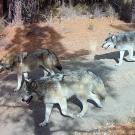
Our team is back in the field for wolf monitoring season! In collaboration with the California Department of Fish & Wildlife, we use non-invasive methods to unravel the demographic dynamics of wolves in California. We’ve already captured some stunning images of a wolf pack—an exciting glimpse into the secret lives of these elusive carnivores. Stay tuned for more updates as our season unfolds!________The California Carnivores Program at the UC Davis School of Veterinary Medicine has expanded to include other carnivore species in our research portfolio.
SeaDoc Society's original web series, Salish Sea Wild, has been nominated for two EMMY™ Awards by the National Academy of Television Arts & Sciences! The show is produced by Bob Friel and hosted by SeaDoc Society Science Director Joe Gaydos.
SeaDoc has two Salish Sea Wild episodes nominated in the North West Chapter's Environment/Science - Long Form Content category: